


Hotels of UAE

Diving in Fujairah: Turtles, Coral and Marine Life Just a Two-Hour Drive From Dubai

Add as a Preferred Source on Google

Image credit: divesandy.com

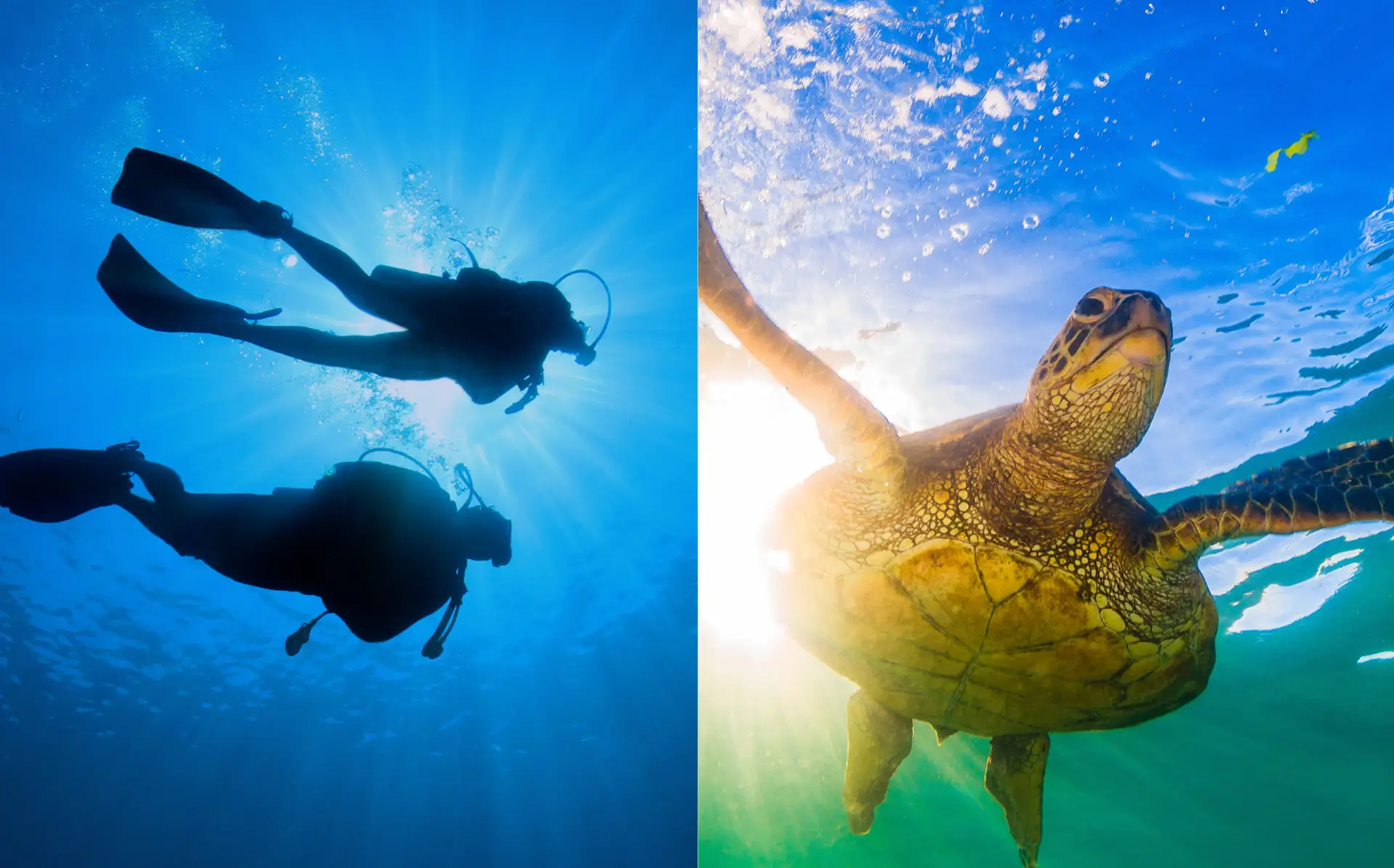
The first thing Mustafa Dameh remembers about diving is not the fishes. It is the silence.

About 12 years ago, when he first descended into the water in Hurghada, Egypt, the Abu Dhabi-born diver found himself in what felt like a parallel universe. He was no longer looking at marine life from behind an aquarium glass. He was inside it. “Everything felt calm, magical, and incredibly peaceful,” he recalls. “I felt like I had transformed into a fish for a little while”. Today, Dameh teaches people how to enter that world themselves. And for him, Fujairah offers something particularly valuable: an underwater escape that does not require leaving the UAE.

But calling Fujairah an underwater paradise would be too easy. The emirate's waters are not necessarily competing with the Maldives, the Philippines or some of the world's most famous diving destinations.

The visibility can vary, the water can be cloudy, and the marine life may not be as abundant as in some of the places experienced divers travel across the world to see. For Rhose Andrei Dela Cruz, who has been diving for around eight times, Fujairah may not be necessarily remarkable when compared with those destinations. But it still has quite a bit to offer.

For beginners, Dela Cruz says, Fujairah can be a good place to learn, practise diving skills and become comfortable underwater while exploring corals and encountering different types of fish.

Her most recent dive in Fujairah left her particularly fascinated by a large sea urchin that came close to her, as well as caves where fish sheltered inside.

It was a different experience from her first dive in Puerto Galera in the Philippines, where she remembers seeing clear water, healthy corals, turtles, an octopus and an abundance of marine life. The comparison is revealing. Fujairah does not necessarily need to win that competition. Its appeal may lie somewhere else.

A different kind of escape


On the surface, Fujairah is recognisably part of the UAE: roads, resorts, beaches and the mountains that distinguish the East Coast from the country's more urban landscapes. Underwater, however, the rhythm changes.

At Snoopy Island, off the coast of Al Aqah, the experience is less about the rush of an attraction and more about slowing down. Once underwater, conversation disappears. Movement becomes deliberate. Breathing becomes something you notice. The world above is still there, but temporarily feels very far away. There is something almost meditative about it.

Diving demands attention to the simplest things: breathing steadily, controlling your movement, watching your surroundings and staying aware of what is happening around you. There is little room for the constant noise that fills everyday life.

For a few minutes, the usual pace of the UAE gives way to something slower. And perhaps that is one of the more interesting reasons to dive in Fujairah. Not because it looks like somewhere on the other side of the world, but because it can make you feel as though you have briefly left the world above. Dameh remembers experiencing that sensation himself when he first learned to dive.

He had always been drawn to outdoor activities and nature, and the curiosity to discover what existed beneath the surface eventually brought him into the water. But the experience was more overwhelming than he expected. There was the equipment, the information and the unfamiliarity of breathing underwater.

Over time, his confidence grew. Three years ago, he decided to become a part-time instructor himself, partly because he remembered what he had wanted from his own instructors: someone who could explain things clearly, logically and patiently, while making sure students genuinely understood what they were doing.

His approach is less about convincing people that diving is an extreme adventure and more about helping them feel comfortable enough to discover it for themselves. “If you’re curious, you’re already halfway there,” he says.
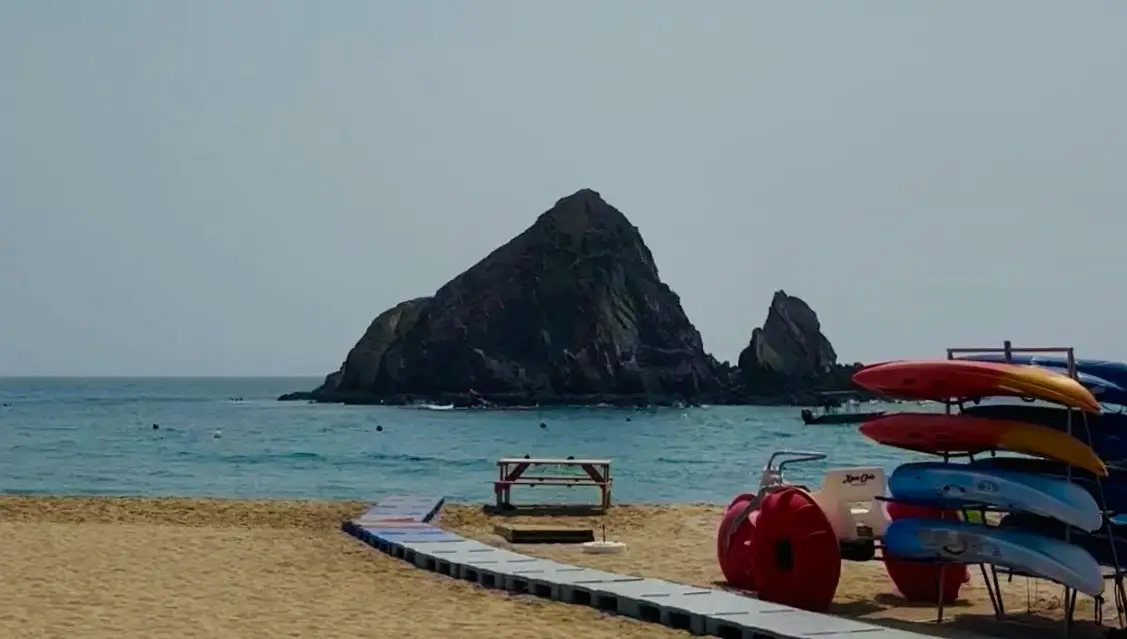
At Snoopy Island, off the coast of Al Aqah, the experience is less about the rush of an attraction and more about slowing down. Once underwater, conversation disappears. Movement becomes deliberate. Breathing becomes something you notice. The world above is still there, but temporarily feels very far away. There is something almost meditative about it.

What is beneath Fujairah's surface?

For Dameh, the answer is one of the reasons he considers Fujairah a local underwater treasure. Depending on the dive site and conditions, divers can encounter turtles, cuttlefish, clownfish – including the familiar “Nemo” – and even seahorses. A diving destination does not exist simply because people are willing to enter the water. It depends on the marine environment remaining healthy enough to make that experience possible.

And in Fujairah, that relationship between tourism and conservation is becoming part of the destination's story. One of the projects planned by the Fujairah Environment Authority aims to create a coral reef park that will provide refuge and food for local demersal fish species while helping protect their eggs and larvae from predators and strong currents. The Fujairah Coral Reef Park is expected to cover around 300,000 square metres — equivalent to about 60 football fields — with more than 1.5 million corals of different native species planned for cultivation.Other efforts are already taking place along the coast.

The Fujairah Environment Authority, together with the Fujairah Research Centre, also released this year rehabilitated green turtles at Al Aqah Beach after they were treated at the centre’s laboratories. The turtles are now being monitored through a research project using tracking sensors to study their movements and nesting patterns, with the data expected to support future conservation and habitat-restoration efforts. The initiative is particularly significant for Fujairah, where verified sea-turtle nesting records along the eastern coastline remain rare. 

You don't have to go far

There is also something uniquely accessible about diving on the UAE's East Coast. For someone living in the country, experiencing an underwater environment does not necessarily require booking a flight, travelling across continents or planning a once-in-a-lifetime expedition.

It can begin with a drive to Fujairah, an instructor, a tank and the willingness to descend. For experienced divers, that may not sound as dramatic as travelling to a world-famous reef. For someone who has never breathed underwater before, however, it can be the beginning of an entirely different relationship with the sea.

Dela Cruz sees Fujairah primarily through that lens. Its waters may not have offered him the same clarity or richness he experienced in Puerto Galera, but they gave him space to practise and explore. Dameh sees something broader: the possibility of discovering a world that most people living above the water rarely think about.

Perhaps both are right. Fujairah does not have to be the Maldives to be worth diving. It does not need the clearest water, the biggest reef or the longest list of marine species. Sometimes the attraction is simpler. You descend beneath the surface, the noise disappears, and for a while the only thing you can hear is your own breathing. And in a country that rarely seems to slow down, that silence may be one of Fujairah's most underrated attractions.

Diving regulations in Fujairah's marine reserves

The Environment Agency – Fujairah enforces strict policies and legislation to protect the emirate’s marine and natural environment. The regulations prohibit dredging and indiscriminate fishing of fish and other marine resources, while also addressing pollution and activities that may threaten the integrity of the environment.

Divers are required to hold a valid diving licence issued by the Environment Agency – Fujairah. Diving of any kind, as well as the use of jet skis, is strictly prohibited within the emirate’s marine reserves, which are designated areas for the protection and development of marine life.

Scroll to Top