Hotels of UAE

2025 GCC Travel Analysis: Why Efficiency is the New Luxury in a Record-Breaking Year

Dubai, UAE: According to new analysis from Dragonpass, the world’s leading provider of digital airport ecosystem platforms, 2025 was a transformative year for regional aviation. Drawing on anonymised traveller data across six GCC markets, the report reveals a region now operating at high travel intensity for more than half the year, with demand increasingly spreading beyond traditional gateway airports.

Discover the 2025 GCC Travel Analysis by Dragonpass. Learn how sustained demand, secondary airport growth, and a 1,010% rise in Fast Track usage are redefining luxury travel in the UAE and Saudi Arabia.

A Six-Month Peak Becomes the New Normal

Dragonpass data reveals that 56% of all GCC travel now occurs between June and November. This signals the end of the traditional “peak season” in favour of a sustained period of high demand. July, August, and October have emerged as the region’s most active travel months, while March remains the only period where all six GCC markets experience a simultaneous slowdown.

“Travel demand in the GCC is no longer seasonal in the traditional sense—it’s continuous, high-volume, and increasingly complex to manage,” says Andre Harrison-Chinn, Chief Marketing Officer at Dragonpass.

While Saudi Arabia and the UAE continue to anchor regional movement—accounting for nearly 80% of total GCC travel, the shared seasonal pattern across all six markets indicates a unified regional travel economy.


The Rise of Secondary Gateways

The data points to a clear decentralisation of airport traffic. In 2025, secondary airports accounted for 32.45 of total GCC travel, as travellers increasingly utilised a broader network of regional gateways.

While Dubai, Riyadh, and Jeddah remain the dominant hubs, their collective share is beginning to soften as connectivity improves elsewhere. Riyadh and Jeddah continue to gain ground, but secondary airports are capturing a growing portion of the overall travel volume. This shift represents an expansion of choice, allowing for more distributed and efficient travel patterns across the Kingdom and the Emirates.

Redefining the Premium Experience

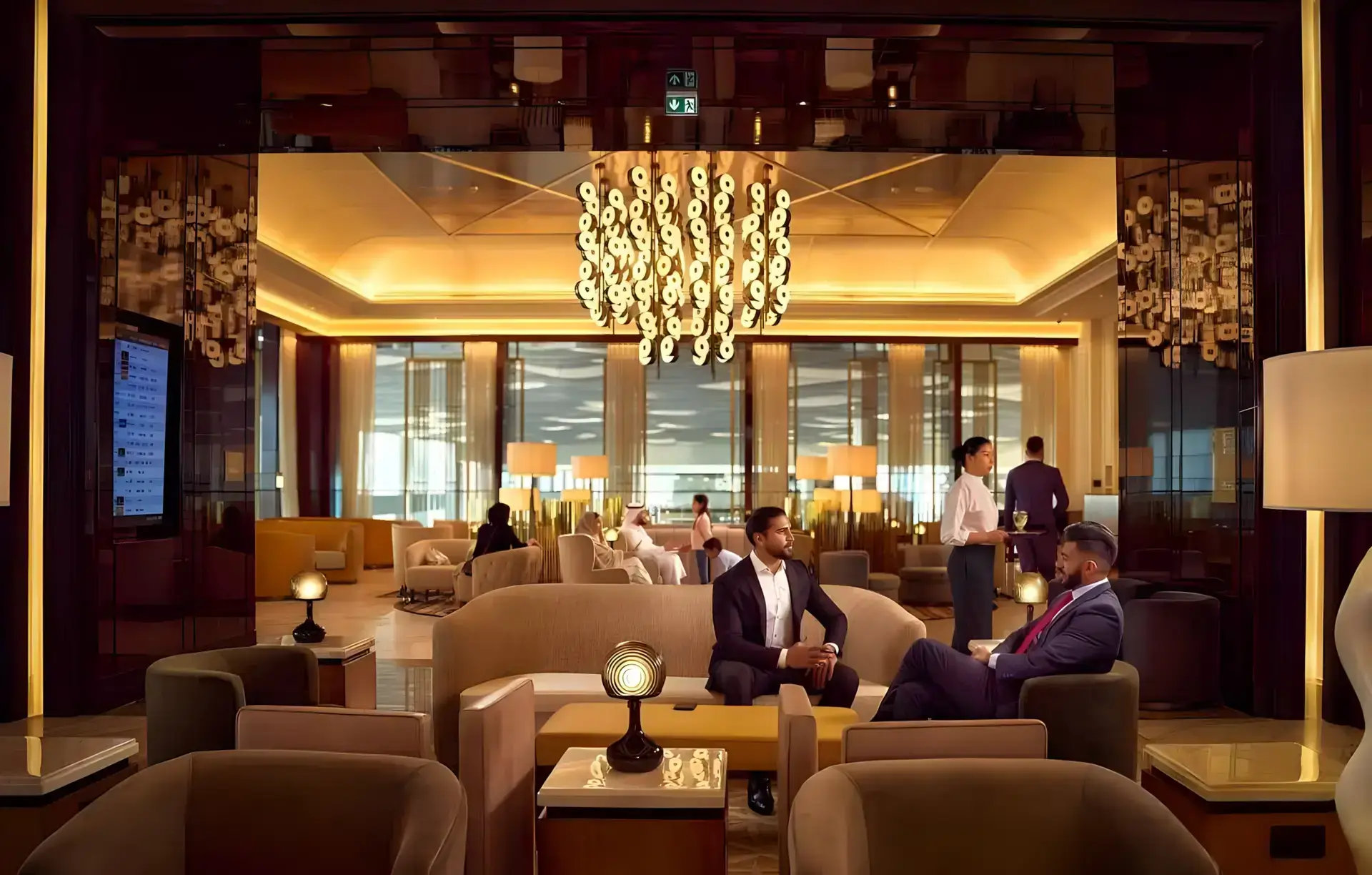
The shift toward decentralisation is even more pronounced within the premium sector, with 47% of premium travel activity occurring outside the top three major airports in 2025. This change reflects evolving expectations as today’s high-net-worth travellers increasingly define luxury through efficiency and ease of access.

Key behavioural shifts recorded throughout the year include a staggering 1,010% year-on-year increase in Fast Track usage as reported by Dragonpass. Travellers are now placing a significantly higher premium on speed, predictability, and control than on traditional luxury lounge spaces, leading to a rise in distributed luxury where premium journeys frequently begin at smaller, more streamlined regional airports. As Harrison-Chinn notes, efficiency has become the ultimate upgrade in this high-demand environment.

Looking Ahead: Designing for Sustained Motion

As GCC travel volumes remain elevated for longer periods, the implications for the hospitality and aviation sectors are profound. Infrastructure, passenger flow, and guest experience design must adapt to a region that no longer operates in short cycles but in sustained motion.

Have a story to share with us? Email the author on jenny@hotelsofuae.com.
Scroll to Top