

For many UAE residents, 8pm signals the end of the day. For Talabat riders, however, the busiest hours are often just beginning.
Carrying a cellphone in one hand, one delivery rider agreed to answer a few quick questions moments after climbing several flights of stairs to deliver a pizza. Sweating from the effort and the heat, and showing the messages on his phone from the next client, he apologised with a smile, saying: “English not very good”.
Asked whether he hoped to eventually return to his home country, Pakistan, he replied no, citing the difficulties he could face there. “Here in the UAE we receive a good salary,” he said. Using a translation app, the conversation continued at a fast pace.
His income mainly depends on commissions, including pay-per-delivery rates, incentives, and bonuses.
The rider explained that he works around 10 to 12 hours a day and can earn between AED 100 and AED 200 daily. Muzamal is just one of thousands of workers considered everyday heroes across the country, mainly during periods of crisis.
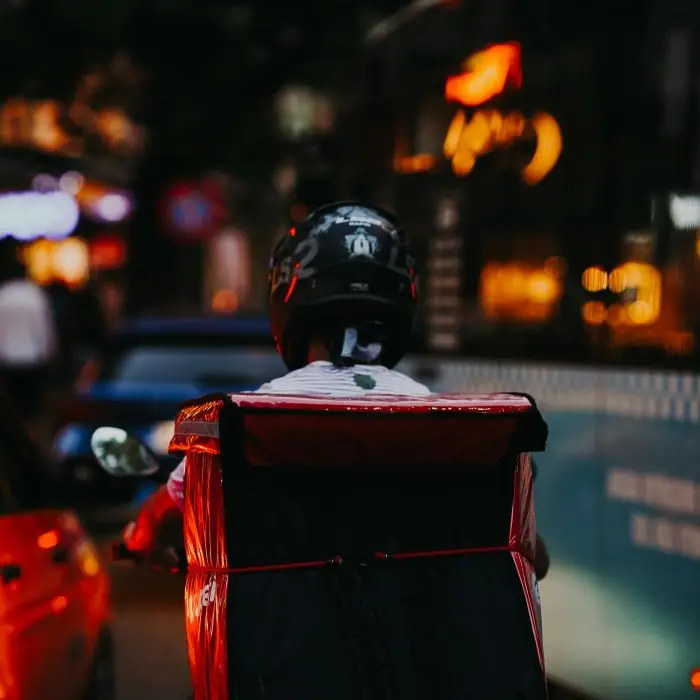
Talabat riders have increasingly come to symbolise resilience and part of the essential network that supports everyday life in the United Arab Emirates. Even in 41°C in the afternoon delivery riders continue to circulate across the city without pause.
Regardless of the challenges residents may face, the outdoor temperature, or whether it is a public holiday or not, they remain a constant presence across the country, connecting restaurants and customers during moments of disruption and transition. Their visibility also reflects a broader transformation in the food and beverage sector, where takeaway and delivery services have become increasingly central to how people now dine.
Convenience is reshaping consumer habits
For some people, the convenience of having groceries and ready-to-eat meals delivered to their doorstep outweighs the traditional restaurant experience.
Joel Wates, a fitness trainer from South Africa who has been living in the UAE for the past six months, says his weekday routine is demanding, with multiple classes to coach every day, so he often relies on delivery services. Delivery apps also help him take care of his four cats. He admits that, with such a busy schedule, he sometimes forgets to buy their food and no longer has time to go out before their next mealtime.
Rafael Bruno, a 33-year-old engineer who lives in Ras Al Khaimah, has a different reality. He prefers to do the grocery shopping by himself, because he lives around five minutes from the supermarket. For him, cooking at home is a priority, and he rarely uses delivery services. At most, once every three months. But he still acknowledges the role these riders play in everyday life in the country: “Talabat riders are considered heroes because they keep working during the peak summer, riding motorcycles under extreme conditions. They are definitely necessary during periods of crises because they help people save both time and fuel."
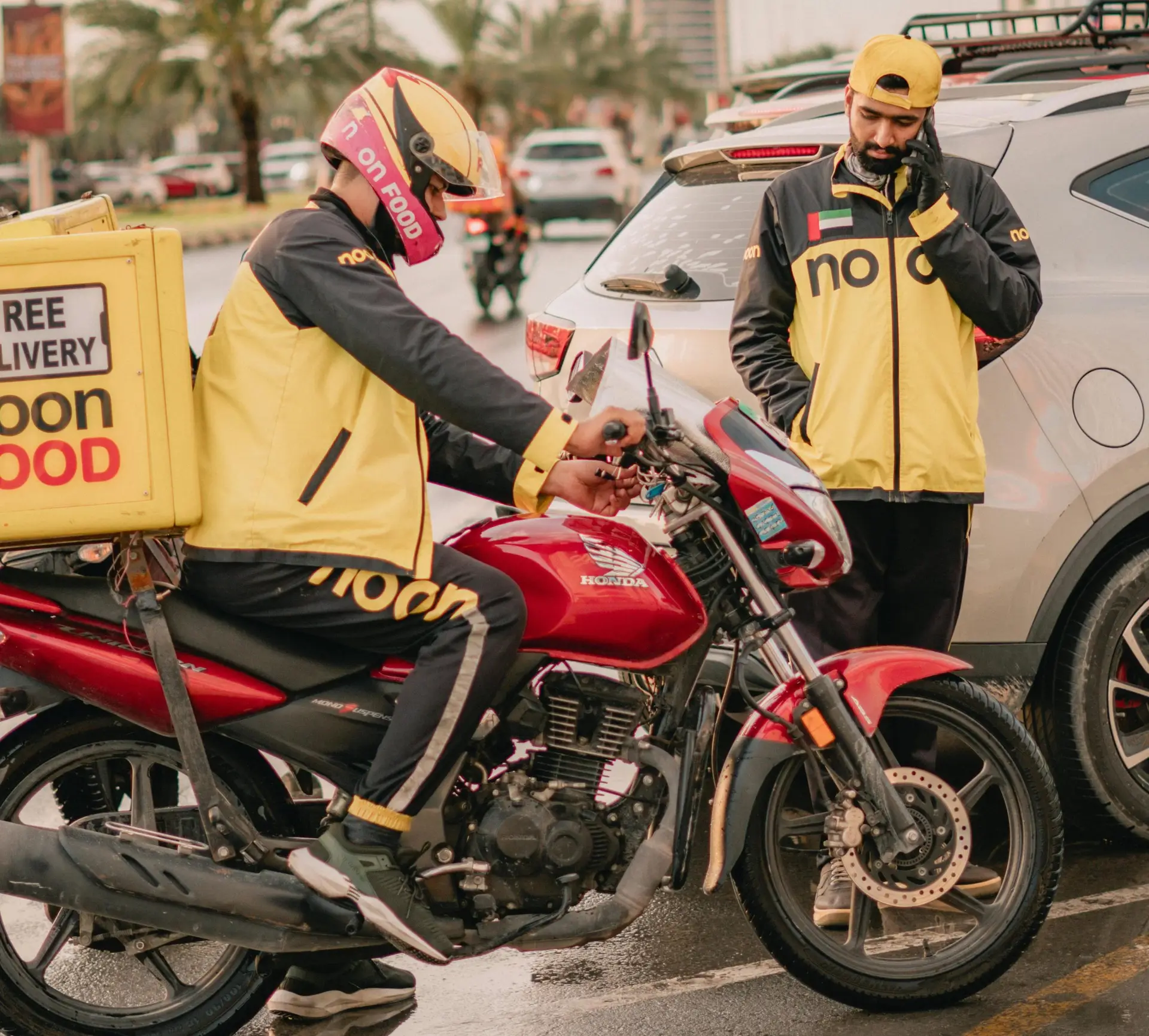
Delivery platforms have become deeply embedded in everyday life across the UAE.
The scale of that shift is measurable. The UAE's foodservice sector was worth around AED 68 billion in 2025, according to Deloitte's Foodservice Market Monitor 2026, with delivery growing faster than any other part of the market. Proprietary research from Mordor Intelligence puts that growth at a forecast 18.65% annually through 2031, ahead of every other service type including dine-in. For operators, the numbers are already changing how they build their businesses: 41% are now planning dedicated delivery and takeaway spaces, and 34% of quick service restaurant operators are moving toward takeaway-only formats.
Riccardo Caravita, Food & Beverage Global Brand Manager at Fiere di Parma, says the shift has fundamentally changed how restaurants manage customer experience.
He argues that delivery compresses hospitality into a much smaller interaction, where packaging and food integrity become central to brand perception.
According to Caravita, within dine-in settings, operators control the entire journey: atmosphere, service, plating and timing. In delivery, much of that experience is compressed into packaging, food integrity and digital interaction. This is why packaging is becoming more strategic. It no longer plays only a functional role; it also becomes part of product perception, quality assurance and even willingness to pay more.
Deloitte’s Foodservice Market Monitor 2026 further highlights how foodservice operators are actively creating dedicated delivery and takeaway spaces, while many quick-service restaurant brands are also developing takeaway-only formats to cater to changing consumer preferences. “In addition, consumers are clearly rewarding convenience when it is combined with quality. Premium packaging, for example, is emerging as a real growth driver in delivery: 90% of consumers say they would order a wider variety of dishes when premium packaging is available, and 53% are willing to pay more for it.
This shows that delivery is increasingly part of the brand experience itself, rather than simply a substitute for dining out”, explains the brand manager. But alongside this expansion comes a set of economic pressures that operators are increasingly having to navigate. As noted by Caravita, the first challenge is profitability.
Delivery helps restaurants reach more customers, but it also comes with higher costs, including packaging, platform fees, logistics, and more complex day-to-day operations.
This is why many operators are investing in automation and productivity tools to improve efficiency, even if only a small share currently see clear financial benefits. This pressure on profitability is also visible on the streets, where delivery riders have become essential to keeping the system fast and functional. In the heat, in traffic, and late into the night, they move through the city as the final link in a system built on speed and convenience, and increasingly dependent on their presence to keep it running.
Images credit: pexels.com